Blog Submission Sites: 20 Platforms to Earn Backlinks

Artificial Intelligence
September 6, 2026
You spend days crafting a 3,000-word deep dive, publish it to your blog, and watch your analytics flatline at zero visitors. Without an existing audience or established domain authority, even exceptional content stays invisible to search engines and AI answer engines alike.

The fastest way to break out of this search isolation is publishing authoritative content on established industry platforms. Finding legitimate blog submission sites that command real organic traffic and strict editorial standards allows you to tap into proven audiences, earn authoritative editorial backlinks, and establish topical relevance in your niche.
However, the landscape of external publishing has changed dramatically. Mass-blasting generic articles to low-tier directories now triggers algorithmic penalties rather than ranking gains. Today, successful guest publishing requires identifying high-impact platforms, understanding their specific editorial criteria, and pitching original research that benefits their readers.
- Vetted blog submission websites deliver authoritative backlinks, qualified referral traffic, and brand entity associations that algorithms trust.
- Google distinguishes between low-value link farms and genuine editorial contributions based on topical relevance, traffic patterns, and content depth.
- Securing placements on top platforms requires matching strict editorial guidelines and pitching unique data or case studies.
- A balanced link profile combines editorial dofollow backlinks with nofollow authority citations and strong internal linking.
Why Guest Posting Remains an Unrivaled Growth Lever
Many digital marketers mistakenly view guest blogging merely as a mechanical link-building tactic. In reality, external publication on reputable domains serves as a multi-channel growth engine that influences search visibility, brand recognition, and audience acquisition simultaneously.
When you secure an editorial placement on a respected industry publication, you receive several compounding benefits:
- Direct Referral Traffic: High-authority websites attract thousands of daily readers actively looking for actionable insights. A single contextual link inside an insightful tutorial can drive consistent, high-intent prospective customers directly to your site.
- Entity Association and Topical Authority: Modern search engines evaluate semantic connections between brands and topic clusters. When search algorithms continuously crawl your brand name alongside recognized industry leaders, your site builds entity trust faster than publishing exclusively on your own domain.
- Sustainable Search Equity: Contextual backlinks embedded naturally within thorough, relevant articles pass legitimate PageRank. According to Moz's guide on backlink fundamentals, editorial links earned through genuine contributions remain one of the most heavily weighted ranking factors in organic search.
- Amplified GEO (Generative Engine Optimization): Large language models like ChatGPT and Perplexity index prominent industry publications heavily. Earning citations across multiple recognized portals directly increases the likelihood that AI search engines recommend your company in generated summaries.
Never evaluate a submission opportunity solely on third-party metrics like Domain Rating (DR) or Domain Authority (DA). A site with a DR of 55 and 50,000 organic monthly visitors in your exact niche is infinitely more valuable than a general DR 80 site with declining search visibility and irrelevant content.
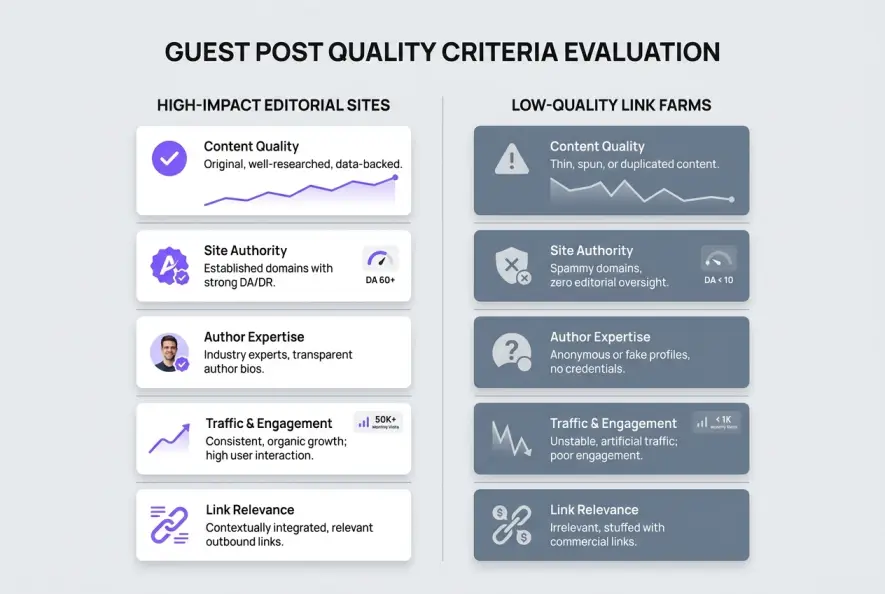
The 4-Tier Evaluation Matrix: Spotting High-Impact Sites vs. Link Farms
Before pitching any platform, you must separate legitimate editorial publications from toxic private blog networks (PBNs) and content farms. Publishing on sites that sell links indiscriminately can violate Google's search spam policies and compromise your entire organic presence.
When you audit potential blog submission sites, your first filter must always be search traffic health and editorial rigor.
1. Organic Traffic Trends and Search Stability
Use SEO analysis tools to examine the target domain's organic traffic history over the last 18 to 24 months. If a website shows sudden, catastrophic drops following core search updates, it indicates quality or link manipulation issues. Target platforms that demonstrate steady or rising organic search trajectories.
2. Strict Editorial Guidelines and Contributor Review
Reputable publications maintain transparent editorial standards. They demand original reporting, unique illustrations, proper citations, and actionable value. If a platform promises instant, unmoderated publishing or accepts payment for non-sponsored links, avoid it.
3. Contextual and Natural Outbound Link Policies
Inspect existing articles on the prospective site. Are outbound links natural, highly relevant, and pointing to genuine references? If articles are packed with commercial anchor text pointing to unrelated gambling, crypto, or essay writing services, the domain is a commercial link farm.
4. Audience Engagement and Community Signals
Look for active social sharing, genuine reader comments, and named author bios with real professional footprints. Authentic publications invest in reader communities and guard their editorial reputation fiercely.
8 High-Authority Platforms Vetted in Detail
To help you target high-yield editorial opportunities, we analyzed the submission requirements, content standards, and link policies of leading industry portals. Below are 8 authoritative platforms across business, technology, and marketing that accept high-quality guest contributions.
1. HubSpot Blog
Target Niches: Inbound Marketing, Sales, Customer Service, AI Business Workflows, CRM Strategy
Domain Authority: 93+
Submission Process: Periodic pitch windows via official contributor portal
Link Policy: Contextual attribution, editorially reviewed
HubSpot runs one of the most respected publications in the B2B and SaaS marketing landscape. They maintain distinct blog sections dedicated to marketing, sales strategy, service teams, and business leadership.
To secure a placement on HubSpot, your pitch must offer actionable, non-promotional value backed by proprietary research, unique frameworks, or tactical teardowns. HubSpot enforces stringent guest post guidelines: submissions must exceed 1,500 words, include authoritative data points, and avoid fluff. Pitch an outline before writing the draft, and demonstrate how your proposed piece fills an existing content gap on their site.

2. Smashing Magazine
Target Niches: Web Design, Frontend Development, UX/UI, Performance Optimization, Accessibility
Domain Authority: 90+
Submission Process: Comprehensive proposal submission via editorial form
Link Policy: Dofollow contextual resources for technical citations
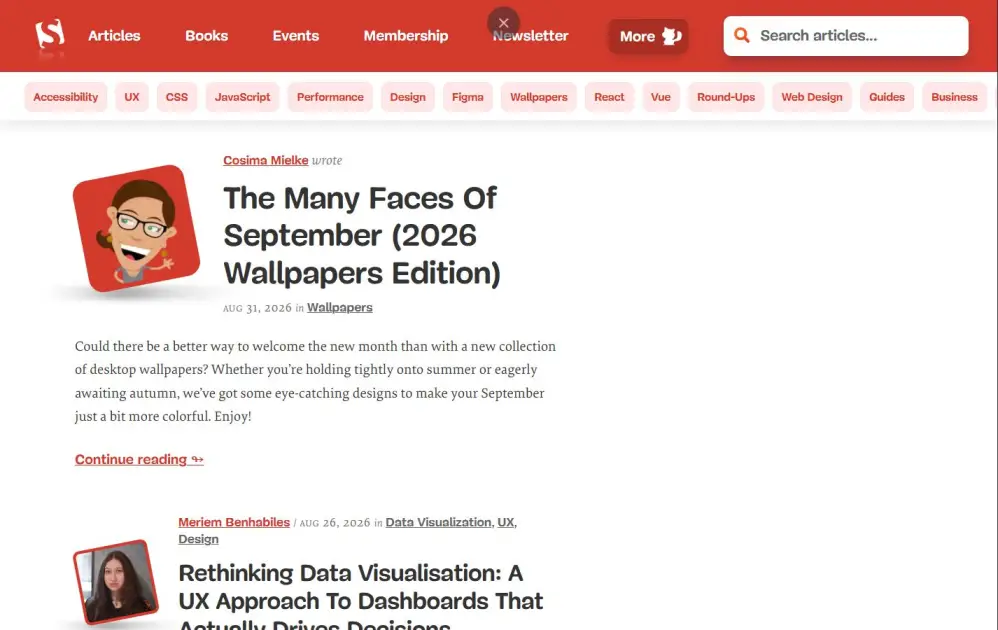
Smashing Magazine is a premier destination for web designers, frontend engineers, and product builders. Their editorial review is notoriously thorough, often involving multiple revision rounds with dedicated technical editors.
They actively seek in-depth, practical guides, real-world case studies, and novel coding techniques. They do not accept superficial listicles or commercial product roundups. Writing for Smashing Magazine requires deep subject-matter expertise and clean, functional code snippets or design assets. In exchange, accepted authors gain massive industry prestige and durable, high-authority backlinks.
3. Hackernoon
Target Niches: Software Engineering, Web3, Artificial Intelligence, Startups, Cloud Infrastructure
Domain Authority: 88+
Submission Process: Direct writer account setup and self-service draft queue submission
Link Policy: Editorially verified links (mix of dofollow and nofollow depending on link context)
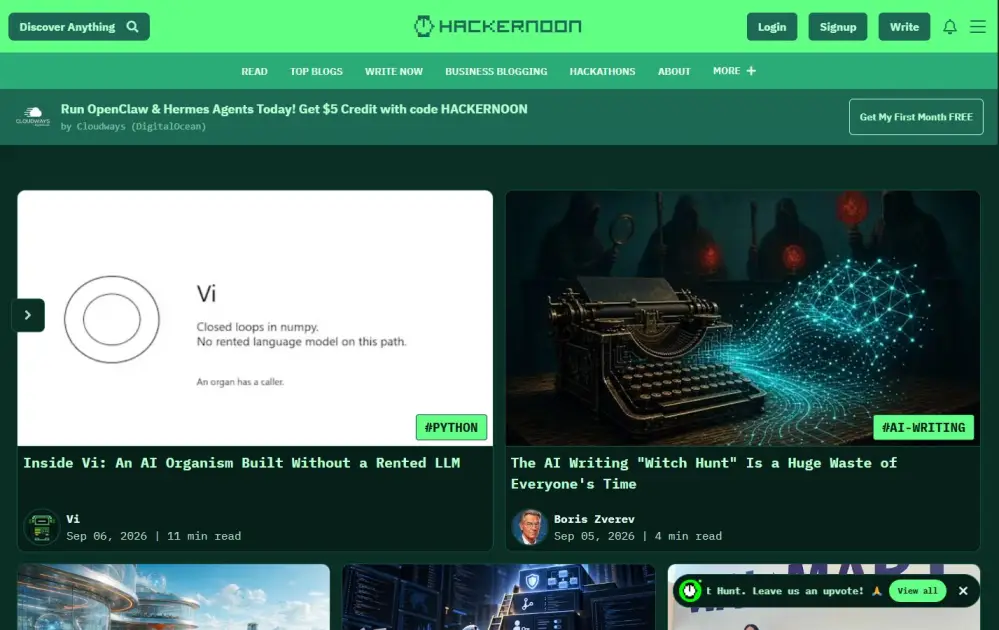
Hackernoon is an open technology publishing platform that bridges the gap between independent developers and global tech leaders. While anyone can create an account and submit a draft, every single article is manually reviewed by human editors before publication.
Unlike conventional tech blogs that accept guest posts, Hackernoon embraces conversational, practitioner-first storytelling. Articles detailing real-world engineering hurdles, open-source tool builds, or architectural decisions perform exceptionally well. Ensure your submission contains zero marketing jargon and adheres strictly to their contributor code of conduct.
4. VentureBeat
Target Niches: Enterprise AI, Machine Learning, Data Analytics, Cybersecurity, Executive Tech Leadership
Domain Authority: 92+
Submission Process: Contributor pitch submission to specific vertical editors
Link Policy: Selective editorial links (strictly non-commercial)
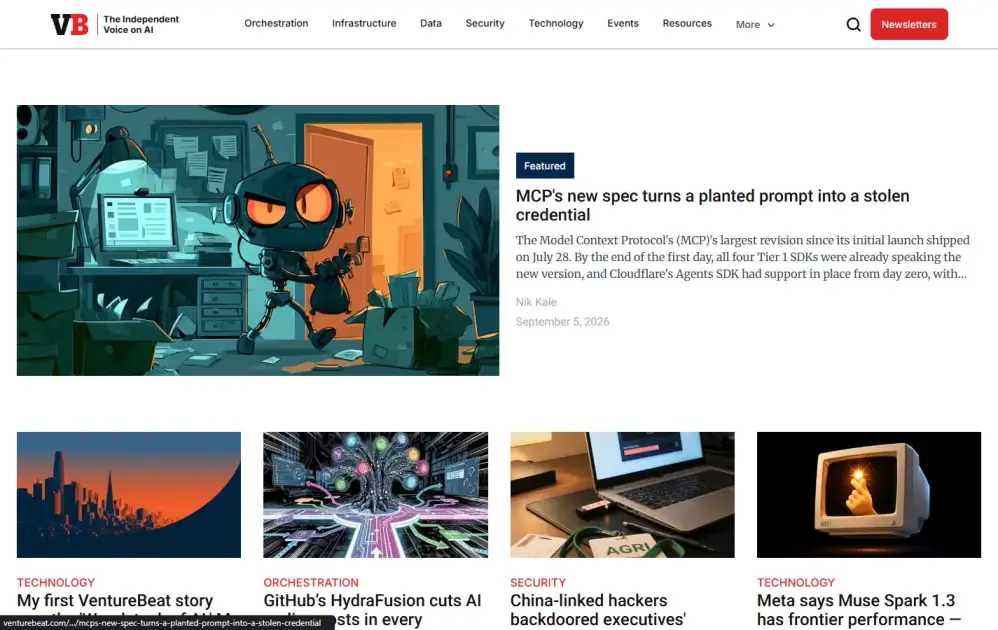
VentureBeat is a leading digital media brand covering transformative enterprise technologies. Their guest column features perspectives from technical founders, enterprise CTOs, and AI researchers.
VentureBeat looks for analytical think-pieces that interpret industry trends rather than basic how-to tutorials. If you have proprietary benchmarking data on model inference costs, enterprise cloud migrations, or cybersecurity vulnerabilities, VentureBeat's guest column offers unmatched visibility among executive decision-makers.
5. Social Media Examiner
Target Niches: Social Media Strategy, Organic Community Building, Creator Economy, Paid Social
Domain Authority: 88+
Submission Process: Formal pitch application with past writing samples
Link Policy: Author bio links and relevant contextual references
Social Media Examiner is the gold standard for tactical social media marketing guides. Their readers expect detailed, click-by-click tutorials accompanied by actual screenshots and step-by-step instructions.
When preparing a pitch for Social Media Examiner, focus on a hyper-specific tactical problem—such as optimizing short-form video retention or running automated LinkedIn outreach campaigns. Pitch an idea that hasn't been covered on their blog in the last twelve months, and outline the exact workflow steps you plan to demonstrate.
6. SitePoint
Target Niches: JavaScript Frameworks, CSS Architecture, DevOps, Backend Engineering, AI Tooling
Domain Authority: 87+
Submission Process: Proposal submission to dedicated editorial channel
Link Policy: Contextual dofollow citations for technical documentation and tools
SitePoint caters to digital creators, developers, and tech entrepreneurs. They publish technical tutorials, programming libraries comparisons, and web development fundamentals.
SitePoint's editorial staff expects contributors to provide tested code repositories (such as GitHub links or CodePen demos) alongside their written analysis. If your business builds developer tools, APIs, or developer-focused SaaS, contributing to SitePoint is an exceptional link-building and community-building channel.
7. Outbrain Blog
Target Niches: Native Advertising, Performance Marketing, Content Distribution, Conversion Optimization
Domain Authority: 85+
Submission Process: Direct outreach to the editorial marketing team
Link Policy: Contextual links to educational resources
Outbrain's content portal focuses heavily on digital advertising strategies, audience engagement metrics, and modern content promotion frameworks. They regularly feature guest insights from agency practitioners and growth marketing specialists.
Articles that perform well on Outbrain feature actionable data from paid media experiments, multi-channel attribution tests, and conversion rate optimization case studies. Ensure your pitch focuses on solving a clear performance marketing challenge.
8. Business2Community (B2C)
Target Niches: Small Business Growth, SaaS Operations, E-commerce Strategy, Leadership, Sales
Domain Authority: 86+
Submission Process: Contributor application and syndicate feed review
Link Policy: Editorial links and author profile branding
Business2Community aggregates and publishes cutting-edge perspectives across the entire commercial spectrum. It remains one of the most versatile business blogs that accept guest posts for founders and B2B marketers.
B2C prioritizes timely, pragmatic commentary on business operations, customer retention tactics, and technological disruption in modern commerce. Maintaining consistent quality on B2C can generate steady syndication and secondary backlinks from other publishers monitoring their feed.
Master Directory: 12 More Free & High-Authority Blog Submission Websites
Beyond the primary publications detailed above, dozens of specialized free blog submission sites offer high-value opportunities to build your link profile and reach targeted audiences. Below are vetted blog submission sites across major verticals that offer dependable editorial exposure when pitched properly.
| Website | Primary Niche | Estimated DA/DR | Accepted Content Formats | Typical Link Type |
|---|---|---|---|---|
| Mention Blog | Brand PR, Reputation Management, Social Listening | DA 84 / DR 82 | In-depth marketing guides, data studies | Contextual Editorial |
| Techopedia | Cybersecurity, Cloud Tech, Enterprise IT | DA 85 / DR 83 | Technical definitions, architecture overviews | Dofollow Educational |
| Content Marketing Institute | Editorial Strategy, Content Ops, Brand Storytelling | DA 89 / DR 87 | Strategic essays, enterprise playbooks | Contextual Reference |
| Designmodo | UI/UX Design, Web Dev, Email Frameworks | DA 81 / DR 80 | Design tutorials, component breakdowns | Contextual Resource |
| ReadWrite | Connected Devices, FinTech, AI, Smart Mobility | DA 84 / DR 81 | Trend analyses, industry thought leadership | Editorial Contributor |
| Bplans | Small Business Strategy, Financial Modeling, Startups | DA 78 / DR 76 | Business planning guides, startup templates | Contextual Dofollow |
| CoSchedule Blog | Marketing Workflow, Project Management, Agile Teams | DA 83 / DR 81 | Workflow blueprints, productivity frameworks | Contextual Attribution |
| Cloudways Blog | Hosting, WordPress Ops, Cloud Server Management | DA 82 / DR 80 | Server setup guides, optimization tutorials | Contextual Dofollow |
| UX Booth | User Experience Research, Interaction Design | DA 76 / DR 74 | In-depth UX research, usability methodologies | Contextual Editorial |
| Benchmark Email Blog | Email Marketing, Lead Nurturing, Automation | DA 79 / DR 77 | Automation case studies, list building tips | Contextual Reference |
| Jeff Bullas Blog | Growth Hacking, Digital Strategy, Entrepreneurship | DA 82 / DR 79 | Actionable marketing checklists, growth studies | Author Bio & Contextual |
| Sitechecker Blog | Technical SEO, Site Audits, On-Page Optimization | DA 75 / DR 74 | SEO audit teardowns, indexing walkthroughs | Contextual Dofollow |
**Dofollow vs. Nofollow Links in Guest Posting:** A dofollow link passes PageRank and directly influences search engine ranking algorithms. A nofollow link (or `rel="sponsored"` / `rel="ugc"`) instructs crawlers not to pass direct link equity, but it still drives qualified referral visitors and reinforces brand entity validity in AI knowledge graphs.
The Modern Guest Post Outreach Workflow: From Pitch to Placement
Securing consistent placements on tier-one publications requires a disciplined, repeatable outreach process. Cold-emailing hundreds of editors with generic subject lines yields near-zero responses and damages your domain's sending reputation.
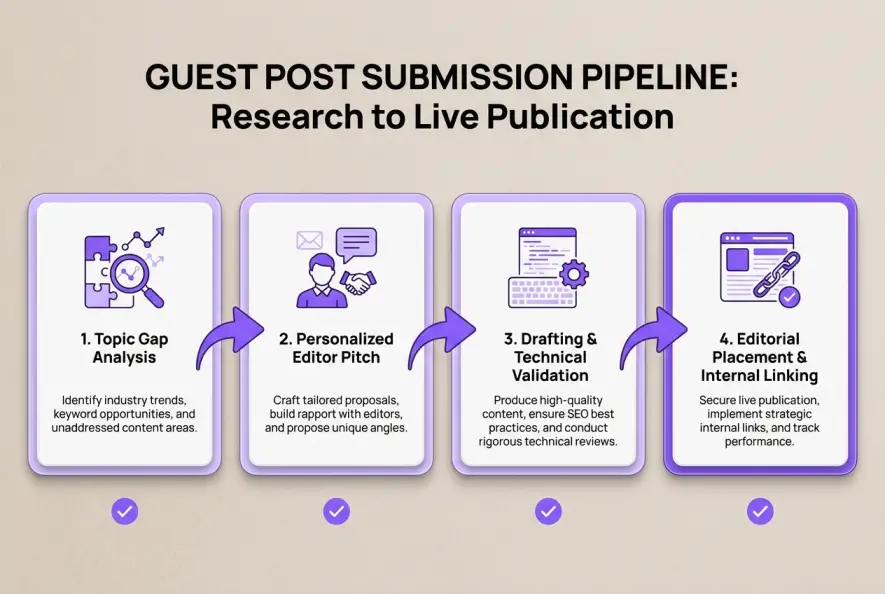
Here is the exact 5-step framework to maximize your pitch acceptance rate:
Step 1: Conduct Content Gap Analysis
Before reaching out, identify topics the target publication hasn't covered thoroughly. Use site search operators in Google (e.g., site:targetblog.com "topic idea") or search their domain in SEO tools. Find subjects where your unique experience or data can deliver fresh insights.
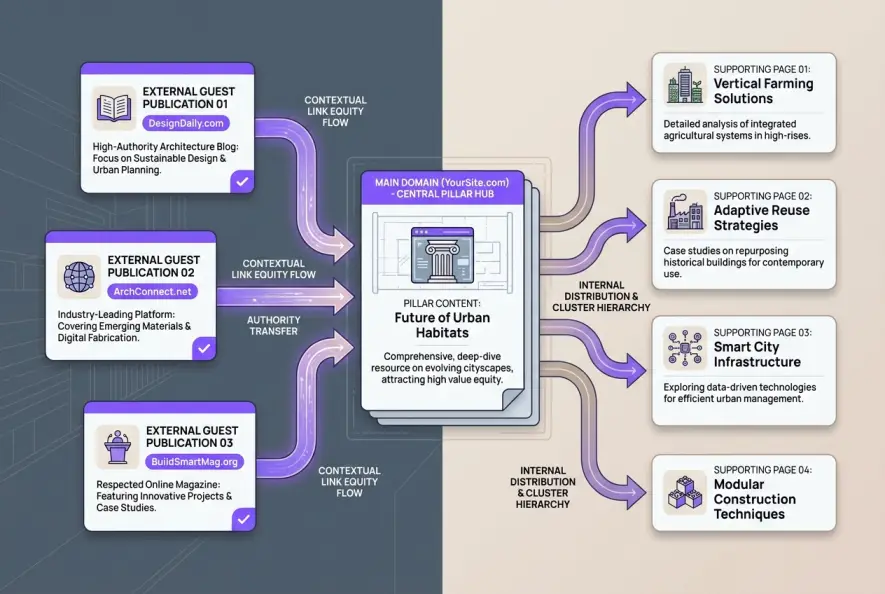
Connecting external publication to your own topical mapping framework ensures that every backlink you earn points to a strategically structured cluster on your primary domain.
Step 2: Locate the Direct Editorial Decision-Maker
Avoid sending pitches to generic contact@ or info@ inboxes. Use professional networking platforms like LinkedIn or email discovery tools to find the Managing Editor, Content Lead, or Blog Editor. Addressing a specific editor by name with reference to recent articles they published instantly elevates your pitch above generic spam.
Subject: Guest pitch: [Specific Working Title Addressing a Gap]

Hi [Editor Name],

I really enjoyed your recent breakdown on [Recent Article Topic], especially your point regarding [Specific Insight from Article].

I noticed your team hasn't recently covered [Specific Unexplored Angle]. I've developed a detailed framework based on [Your Real Data or Case Study] that would show your readers how to solve this exact bottleneck.

Here are 3 specific topic proposals:
1. [Working Title 1]: Brief 2-sentence summary of the actionable takeaway.
2. [Working Title 2]: Brief 2-sentence summary of the actionable takeaway.
3. [Working Title 3]: Brief 2-sentence summary of the actionable takeaway.

Here are two recent examples of my published work:
- [Link to High-Quality Published Sample 1]
- [Link to High-Quality Published Sample 2]

Would any of these concepts fit your upcoming editorial calendar?

Best regards,
[Your Name] | [Your Title / Domain]
Step 3: Write for Maximum Information Gain
Once your topic is accepted, deliver a draft that exceeds the publication's highest standards. Incorporate proprietary screenshots, original data graphs, and concrete step-by-step methodologies.
Modern search algorithms actively reward information gain—content that introduces novel data points or unique structural analysis not found in competing articles. Providing fresh insights ensures the host publication experiences strong organic rankings from your contribution.
Submitting thin, generic AI drafts without human refinement or original data is the fastest way to get blacklisted by editorial teams. Editors review hundreds of pitches weekly; they spot unedited AI boilerplate within the first two sentences.
Step 4: Strategic Link Insertion
Follow the host publication's linking policies precisely. Limit self-referencing links to 1–2 highly relevant, contextual resources on your own site, such as a supporting research report or an in-depth guide. Complement these with authoritative, non-competing external citations (such as official industry documentation, government statistics, or established research institutions).
Scaling External Outreach Alongside Internal Content Production
Building authority through external publications is only half the battle. If your target domain lacks a cohesive internal structure, incoming PageRank dissipates across disconnected pages without lifting your overall organic visibility.
To maximize the ROI of your guest publishing efforts, you must coordinate external link acquisition with a robust internal linking architecture. When an authoritative platform links to a specific guide on your site, internal links should immediately distribute that fresh authority to your core conversion and product pages.
Many high-growth teams automate on-site drafting and topic research so their marketing specialists can focus their manual energy on relationship-driven PR and editorial outreach. For example, Qoreta automates deep keyword research, draft generation, and internal linking on your primary site, allowing lean marketing teams to maintain consistent content velocity while executing high-touch guest post campaigns.
By combining high-quality blog submission sites with a solid on-site foundation unlocks compounding organic growth that algorithmic updates cannot easily disrupt.
Summary Checklist for Guest Submission Success
Before launching your next outreach campaign, run through this final operational checklist:
- Domain Verification: Confirm the target site has sustained organic traffic and active readership.
- Guideline Compliance: Review word count limits, formatting preferences, and image specifications.
- Gap Identification: Pitch concepts that do not duplicate content published in the last 12 months.
- Personalized Outreach: Email the specific vertical editor with 2–3 structured topic proposals.
- Value-First Drafting: Deliver original data, actionable instructions, and custom visual assets.
- Balanced Linking: Include contextual links to authoritative industry sources alongside your target reference.
- Post-Publish Promotion: Share the live post across your social channels and engage with reader comments.
Artificial Intelligence
Intelligence without limits.
We believe great content deserves honest authorship—even when it's AI.
Frequently Asked Questions
Yes, provided the platforms maintain strict editorial review, real organic search traffic, and strict anti-spam link policies. However, submitting content to unmoderated, automated directories or sites created solely for selling links can lead to algorithmic link devaluation or manual actions from search engines.
For most growing brands, earning 2 to 5 high-quality, editorially vetted guest post placements per month is significantly more effective than blasting dozens of low-tier submissions. Focus on publication authority, audience alignment, and content depth over raw link volume.
Yes. While nofollow links do not pass direct PageRank, they deliver valuable referral traffic, enhance brand visibility, and help search engines build entity associations. Furthermore, natural backlink profiles always contain a healthy balance of both dofollow and nofollow links.
Guest posting involves writing an original, exclusive article specifically for a third-party publication. Article syndication involves re-publishing an existing article that originally appeared on your own site, which requires proper canonical tags (`rel="canonical"`) to prevent duplicate content issues.
Look at the target website's 'About Us', 'Editorial Team', or 'Contact' pages. Alternatively, search LinkedIn for the company name paired with job titles such as 'Managing Editor', 'Content Marketing Manager', 'Head of Content', or 'Blog Editor'.
You can use AI tools to assist with outlining, data organization, and initial brainstorming, but submitting raw, unedited AI content will lead to immediate rejection by tier-one editors. Guest posts require original human expertise, unique case studies, firsthand insights, and meticulous editorial polish.